Learn
Tax, explained the way it should have been in the first place.
No jargon, no assumed knowledge, and no pretending things are simpler than they are. Everything here is written for drivers and checked against current HMRC rules.
Self Assessment in Manchester: A Complete Guide for Ride-Hailing Drivers
A self tax assessment return for a Manchester driver is the SA100 plus one self-employment page, with fares in turnover and mileage in expenses. This guide shows what goes in each box, when the short page applies, and which figures to reconcile before 31 January.
Read the guide

HMRC Login for Drivers: Recovering a Lost Government Gateway ID, Step by Step
To fix a lost HMRC login, use the "problems signing in" route on GOV.UK to recover your user ID or reset your password, and choose "You can get help" if you cannot receive your access code. A locked account unlocks after 2 hours. Follow these steps, and never share your login with anyone.
Read more
Self Assessment Tax Return in Leeds: Your Questions Answered
A self assessment tax return can usually be corrected online within 12 months of the 31 January deadline, and a bill you cannot pay can often go on a payment plan. This Leeds FAQ explains amending, payments on account, refunds and your SA302 after you file.
Read more
Self Assessment Return and Making Tax Digital: The 2026 Update for Drivers
Your self assessment return for 2025/26 is still a normal Self Assessment return, due online by 31 January 2027, for most drivers. Only drivers who joined Making Tax Digital for 2026/27 add quarterly updates, with their 2026/27 return following in January 2028.
Read more
Tax Return Checklist for Glasgow Ride-Hailing Drivers
A tax return checklist for Glasgow ride-hailing drivers means confirming your Scottish taxpayer status, gathering your records and reconciling your figures before you submit. This guide gives you the documents to collect, the totals to compare and a final tick-list with "stop and check" flags.
Read more
Accountant for a Ride-Hailing Driver with Rental Property: Complete Guide
A ride-hailing driver accountant who also handles your rental property must prepare both profits on one Self Assessment return and test them together for Making Tax Digital. This guide gives you the scoping checklist, a worked example and the questions to ask before you hire.
Read more
Self-Employed Ride-Hailing Driver Tax in London: Step-by-Step How-To
Self-employed ride-hailing drivers in London register with HMRC, keep records from the first trip, file Self Assessment by 31 January and pay tax on profit. This step-by-step guide covers your first year, from first fare to first payment, including payments on account.
Read more
Ride-Hailing Driver Expenses and CIS: Your Questions Answered
Ride-hailing driver expenses you can claim stay the same when you also work under CIS, but you must keep driving costs apart from construction costs and treat CIS deductions as tax credit, not an expense. This FAQ shows how to split a shared vehicle and keep one mileage log.
Read more
Private Hire Driver Accountant in Birmingham: 2026 Update for Local Drivers
A private hire driver accountant in Birmingham should now be working to three 2026/27 changes: the simplified mileage rate rose to 55p for the first 10,000 miles from 6 April 2026, Making Tax Digital for Income Tax began for qualifying income over £50,000, and the penalty regime is moving to points. This update shows what changed, what to do now and what to finish before 31 January 2027.
Read more
Making Tax Digital for Ride-Hailing Drivers with Payroll: A Checklist
Making tax digital ride-hailing drivers with a PAYE job or company payroll only count gross self-employment and property income towards the thresholds, not employment pay. Use this checklist to see which income counts, what records each stream needs and how quarterly update dates differ from payroll deadlines.
Read more
55p Mileage Allowance: Step-by-Step Bookkeeping for the 10,000-Mile Switch to 25p
The 55p mileage allowance covers your first 10,000 business miles in 2026/27, and every business mile after that is worth 25p. Full-time drivers usually cross that line mid-year, so keep a monthly running total, split the crossing month at exactly 10,000, and carry the year-to-date figure into each quarterly update.
Read more
HMRC Mileage Rates 2026 in Cardiff: A Complete Guide to the Backdated 55p Catch-Up
HMRC mileage rates 2026 give self-employed drivers 55p a mile for the first 10,000 business miles and 25p after that, backdated to 6 April 2026. If your Cardiff spreadsheet, app or MTD software still used 45p for April to autumn, you can fix it now by re-rating the same miles, not by rewriting your log.
Read more
UK VAT Registration Threshold in Nottingham: A Checklist for a One-Off Busy Spell
If a one-off busy spell pushes your rolling 12-month takings just over the £90,000 UK VAT registration threshold, you can ask HMRC for an exception instead of registering. You must show your taxable turnover for the next 12 months will stay at or below £88,000, apply in writing, and keep checking every month.
Read more
Mileage Rate 2026 in Newcastle: Your Questions Answered on Changing or Adding a Car
The mileage rate 2026 is 55p a mile for your first 10,000 business miles in 2026/27, then 25p, and changing your car does not restart that 10,000-mile band. Each car gets its own choice of method, so a replacement car is your one chance to move between the flat rate and actual costs.
Read more
VAT Registration Requirements: 2026 Update on Late Registration and HMRC Letters
VAT registration requirements apply from the date you were first liable, not the date you notice. If you passed £90,000 months ago or HMRC has written to you, you owe VAT on fares since your effective date, and telling HMRC first can bring a penalty down to nil.
Read more
Self-Employed Ride-Hailing Driver Tax in Glasgow: Complete Guide for Local Drivers
Self employed ride-hailing driver tax in Glasgow is Scottish Income Tax on your profit plus Class 4 National Insurance, paid through Self Assessment. Glasgow drivers use Scottish bands, but National Insurance and the mileage rates are UK-wide, so this guide builds your first-year timeline and a worked bill side by side.
Read more
Private Hire Driver Accountant in Liverpool: Your Questions Answered
A good private hire driver accountant in Liverpool should give you a written fixed fee, say exactly what that fee covers, and tell you who files your return and who answers if HMRC writes. Ask those questions before you sign anything, because the answers decide whether the arrangement protects you or just takes a monthly payment.
Read more
Making Tax Digital for Ride-Hailing Drivers: 2026 Update for Self Assessment Clients
Making Tax Digital for ride-hailing drivers has been live since 6 April 2026 for anyone with qualifying income above £50,000, and the first quarterly deadline (7 August 2026) has already passed. The second update is due by 7 November 2026, and HMRC is not issuing penalty points for late quarterly updates in 2026/27, though late returns and late payments still cost money.
Read more
Limited Company for a Sheffield Ride-Hailing Driver: A Decision Checklist
Should I set up a limited company as a ride-hailing driver in Sheffield? Often not yet, but eight yes/no questions on profit, VAT, retained cash, licensing, your driver agreement, admin and other income will show where you stand. Use the score as a prompt, then check with Sheffield City Council and an accountant.
Read more
Ride-Hailing Driver Expenses You Can Claim: A Step-by-Step Guide for Drivers with Payroll
Ride-hailing driver expenses you can claim are split by income stream when you also have PAYE work or a limited company with payroll: fare-related costs go on your Self Assessment trading page, job costs go through your employer, and company costs stay in the company. Each cost can be claimed once, so follow our step-by-step method for 2026/27.
Read more
HMRC Login for Making Tax Digital: A Complete Guide to Connecting Your Software
Your HMRC login is the key that lets Making Tax Digital software send your quarterly updates. You sign in on HMRC's own page, approve the software once, and the connection then runs in the background until it lapses or you remove it.
Read more
Tax Return in Edinburgh: 2026 Update for Local Drivers
Your tax return as an Edinburgh private hire driver changes for 2026/27 in four places: wider Scottish starter and basic bands, a 55p mileage rate, Making Tax Digital and the timing of each. Rates, Class 4 National Insurance and the 31 January deadline stay the same, and Low Emission Zone fines are never deductible.
Read more
Self Assessment July 31 Deadline: A Checklist for Limited Company Driver-Directors
The Self Assessment July 31 deadline still applies after you incorporate: your 31 July 2027 payment is usually half of your 2025/26 sole trader bill. Rebuild the estimate from final profit, salary and dividends, then reduce, pay in full or pay and claim back.
Read more
Self Assessment Tax Return in Bristol: A Step-by-Step How-To for Local Drivers
A self assessment tax return for a Bristol private hire driver is filed online by 31 January, using the main return and the short self-employment pages. This step-by-step guide fills in each box and shows where Clean Air Zone charges, airport fees and licence costs go.
Read more
Self Assessment Return for VAT-Registered Drivers: Your Questions Answered
A VAT-registered driver's Self Assessment return normally shows fares and costs without the VAT that belongs to HMRC. The Flat Rate Scheme, cash basis records and the year you register each change the figures, and this FAQ shows exactly how for 2026/27.
Read more
55p Mileage Allowance: What to Do When HMRC Questions Your Claim
If HMRC questions your 55p mileage allowance claim, check the rate matches the tax year, gather evidence of your business miles and reply by the date on the letter. Where you find a mistake, correct it yourself before HMRC does, because telling HMRC early usually reduces any penalty.
Read more
UK VAT Registration Threshold in Leeds: 2026 Update and Monthly Tracking Routine
The UK VAT registration threshold for 2026/27 is £90,000 of taxable turnover in any rolling 12 months, unchanged from last year. The safest way for a Leeds driver to stay on the right side of it is a 15-minute check on the last day of every month, lined up with your Making Tax Digital quarterly updates.
Read more
Threshold for VAT Registration: Checklist for Drivers With a Second CIS Trade
The threshold for VAT registration is £90,000 of taxable turnover in a rolling 12 months, and it is tested on you as a person, not on each trade. If you drive and also work as a CIS subcontractor, both sole-trade incomes go into one total, using gross invoice values before CIS deductions.
Read more
VAT Registration Requirements: FAQ for Drivers Who Also Let Property
VAT registration requirements look only at taxable turnover, so ordinary long-term residential rent is normally left out of the £90,000 test. Holiday lets, opted commercial property and your own taxable business income go in, and the test runs per legal person, so a jointly owned let is usually counted separately from you.
Read more
Mileage Rate 2026 in Manchester: Step-by-Step Guide to Counting Business Miles
The mileage rate 2026 for self-employed drivers is 55p a mile for the first 10,000 business miles in 2026/27, then 25p. The harder question for a Greater Manchester private hire driver is which miles are business miles, so this guide works through each leg of a shift and shows how to split the year and the 10,000-mile band.
Read more
Ride-Hailing Driver Expenses You Can Claim: A UK Guide for Self Assessment Clients
Ride-hailing driver expenses you can claim are the costs you incur wholly and exclusively to earn your fares, deducted from your profit on your Self Assessment return. For your car you pick one method, 55p a mile for the first 10,000 business miles in 2026/27 or your actual running costs, and for everything else you keep receipts and claim only the business share.
Read more
Private Hire Driver Accountant in Cardiff: Step-by-Step How-To for Local Drivers
A private hire driver accountant in Cardiff files your Self Assessment return, keeps your records in order and deals with HMRC for you, and you can hire one in ten steps. This guide gives the order to do them in, tied to your licence renewal, the HMRC tax check and the 31 January 2027 deadline.
Read more
Making Tax Digital for Ride-Hailing Drivers: Your Questions Answered
Making tax digital ride-hailing drivers must follow it from 6 April 2026 if their self-employed income was over £50,000 in 2024/25, then from April 2027 above £30,000 and April 2028 above £20,000. This guide answers the questions drivers ask most and gives a table to find your own start date, quarterly deadlines and mixed-income position.
Read more
App-Based Driver Tax in the UK: A VAT Checklist
App-based driver tax in the UK includes VAT once your taxable turnover passes £90,000 across any rolling 12 months, or you expect it to within 30 days. This checklist gives you a month-by-month routine to track the threshold, decide when to register and choose a scheme.
Read more
Should a Newcastle Ride-Hailing Driver Set Up a Limited Company? 2026 Update
Should I set up a limited company as a ride-hailing driver in Newcastle? For most drivers earning under about £50,000 profit who spend what they earn, staying a sole trader is usually cheaper and simpler. This 2026 update covers the 2026/27 rates and a break-even worked example so you can test your own numbers.
Read more
Self Assessment Tax Return in Nottingham: Complete Guide to Licensing Costs
On a Self Assessment tax return, a Nottingham driver can usually claim licence costs tied to the driver, such as the badge fee and required medical, even on the mileage rate. Vehicle test costs are different, because HMRC says the flat rate already covers the MOT. This guide sorts every local fee.
Read more
Self Assessment Return for Limited Company Director Drivers: Step by Step
A Self Assessment return is usually needed if you drive through your own limited company and take dividends, because dividends are not taxed through payroll. Your salary and benefits go on the Employment pages, your dividends go on the main return, and your company's filings stay separate. This guide walks through each step, including the new director boxes for 2025/26.
Read more
Tax Return FAQ for London Drivers: TfL Fees, ULEZ and Fines Answered
On a London driver's tax return, licence fees and zone charges paid for work usually reduce profit, while penalty charge notices never do. Zone charges also sit outside HMRC's mileage rate, so you can claim them on top of it. This FAQ sorts each London cost into the right place.
Read more
Self Assessment July 31 Deadline Missed? A 2026 Bookkeeping Recovery Plan for Drivers
The Self Assessment July 31 deadline for 2025/26 has passed, but your books can still show whether that payment was too high or too low. Halve your true 2025/26 bill, compare it with what you paid, then act before 31 January 2027.
Read more
Paying Self Assessment Online: Birmingham Drivers' Weekly Budget Checklist
Paying Self Assessment online on time starts with one date: 31 January 2027 is a Sunday, so slower methods must reach HMRC by Friday 29 January. Birmingham drivers should choose a method by clearing time, then save a fixed share of each week's uneven takings. This checklist shows how, with Clean Air Zone and licence costs built in.
Read more
VAT Registration Online in Edinburgh: Pre-Submission Checklist for Local Drivers
VAT registration online is quickest when you have your rolling 12-month turnover, effective date and documents ready before you start. This Edinburgh checklist covers the figures, GOV.UK details and local paperwork to prepare before you submit.
Read more
Threshold for VAT Registration: 2026 Update for Drivers Who Employ Staff
The threshold for VAT registration is £90,000 of taxable turnover in any rolling 12 months, and it did not change for 2026/27. For a driver business with staff, wages never count towards it, but fares and car hire do, so check your sales rather than your profit.
Read more
UK VAT Registration Threshold in Bristol: FAQ Answered for Local Drivers
The UK VAT registration threshold is £90,000 of taxable turnover over any rolling 12 months, tested at every month end. Bristol hackney carriage and private hire drivers must count full fares before commission, so the bank payout understates the figure. This FAQ shows how to track it and what to do if you cross it.
Read more
VAT Registration Requirements for Drivers With CIS Income: Step-by-Step
VAT registration requirements for a driver with CIS income are tested on gross turnover: fares plus the full value of construction invoices, before CIS deductions. Go over £90,000 in 12 months and you must register within 30 days of the end of that month.
Read more
Mileage Rate 2026 in Sheffield: Complete Guide for Local Drivers
The mileage rate 2026 is 55p a mile for the first 10,000 business miles in 2026/27, then 25p. This Sheffield guide shows where the 10,000th mile lands in a typical year, which rate your 2025/26 return uses, and which local licence and Clean Air Zone costs sit outside the claim.
Read more
Paying Self Assessment Online in Liverpool: What Changes in 2026
Paying Self Assessment online works the same way in 2026: you pay HMRC by 31 January 2027 and, if you have payments on account, again by 31 July 2027. What is new for Liverpool drivers is Making Tax Digital, which shows your tax position every quarter without changing when you pay. This update explains the 2026/27 payment calendar, the HMRC app, budget plans, Time to Pay and the local licence costs to set aside for.
Read more
Self Assessment July 31 Deadline: Your HMRC Questions Answered for Drivers
The Self Assessment July 31 deadline is when your second payment on account is due, usually half of last year's tax bill. If you cannot pay it, think it is too high or have already missed it, act quickly: reduce it, set up a payment plan or pay what you can to limit interest.
Read more
Self Assessment Return: How Your Bookkeeping Feeds Every Box
Your Self Assessment return is built from your bookkeeping: platform statements give your turnover, and your mileage log, receipts and fee records give your expenses. This guide maps every type of driver record to the self-employment pages, then walks through the year-end close-down and reconciliation that turns a year of records into a finished 2026/27 return.
Read more
Self Assessment Software Checklist for Drivers Who Are Also Landlords
Self assessment software for a driver who also lets property must handle two businesses: driving and UK property. It needs separate records and quarterly updates for each, plus correct handling of mortgage interest, the property allowance and joint ownership. This checklist shows what to confirm before you buy.
Read more
Tax Return in Glasgow: Step-by-Step Filing Guide for Drivers
To file your tax return in Glasgow as a ride-hailing, taxi or private hire driver, sign in to HMRC online, enter your gross fares and allowable expenses on the self-employment pages, check that Scottish rates are applied, then submit and pay by 31 January 2027. This guide walks through each step for the 2025/26 return, with a worked example.
Read more
Making Tax Digital Ride-Hailing Drivers: Complete Guide for Limited Company Clients
Making Tax Digital for Income Tax mostly does not apply to the earnings of a limited company, but it can reach you personally if you have other self-employment or property income over the threshold. For Making Tax Digital ride-hailing drivers, the company still follows Making Tax Digital for VAT once registered.
Read more
Should I Set Up a Limited Company as a Ride-Hailing Driver in Sheffield? A Step-by-Step Guide
Should you set up a limited company as a ride-hailing driver in Sheffield? It depends on your profit and on how ride-hailing apps contracts with you, and if you go ahead there are seven steps to follow in order. This guide covers Companies House, Corporation Tax, payroll, banking, insurance and your Sheffield licence.
Read more
App-Based Driver Tax UK: Bookkeeping FAQ Answered for Drivers
app-based driver tax UK bookkeeping starts with recording your gross fares, tips and cash, then claiming the app's commission and running costs as expenses. Keep every weekly statement, log your costs and set money aside for Self Assessment so January is stress-free.
Read more
Taxi Driver Accountant UK in Bristol: 2026 Update for Local Drivers
A taxi driver accountant UK drivers rely on should explain four 2026/27 changes: the 55p mileage rate (not for black cabs), Making Tax Digital over £50,000, the HMRC tax check at licence renewal and VAT. This Bristol update covers each one with council and GOV.UK facts.
Read more
Tax Return in Edinburgh: Complete Guide for Local Drivers
A tax return is how Edinburgh drivers tell HMRC their yearly profit. If you are self-employed, you register, keep records, file online by 31 January and pay Scottish income tax on your profit. This guide covers every step.
Read more
Self Assessment July 31 Deadline: Step-by-Step Guide for Landlord Drivers
The self assessment July 31 deadline is when your second payment on account is due, normally half of last year's bill. If you drive and let property, rental profit is part of that bill, and you can ask HMRC to reduce it if rent falls.
Read more
Paying Self Assessment Online in Cardiff: FAQ Answered for Local Drivers
Paying Self Assessment online is the quickest way to settle your tax bill, and Cardiff drivers can do it through their bank app, the HMRC app or a debit card using an 11-character reference. Payments are normally due by 31 January and 31 July, and this FAQ answers the questions Cardiff drivers ask most.
Read more
Self Assessment Software: 2026 Update for CIS Returns Clients
Self assessment software for CIS subcontractors must record gross pay and CIS deductions separately, and from 6 April 2026 it may need to send Making Tax Digital quarterly updates if your income is over £50,000. This 2026 update shows drivers with CIS income what to look for.
Read more
Car Mileage Allowance in Newcastle: Year-End Checklist for Local Drivers
The car mileage allowance lets Newcastle drivers claim 55p a mile for the first 10,000 business miles in 2026/27 and 25p after. This checklist covers log fields, commuting, Tyne Tunnel tolls, the Clean Air Zone and the 10,000-mile split so your claim holds up.
Read more
VAT Registration Requirements: Complete Guide for Payroll Clients
VAT registration requirements depend on your taxable turnover, not on how many people you employ, so wages never push you over the VAT line on their own. If you run a driver business with staff, payroll costs such as wages and employer National Insurance sit outside VAT, while your registration, returns and PAYE run on separate clocks.
Read more
UK VAT Registration Threshold in Nottingham: Step-by-Step How-To for Local Drivers
The UK VAT registration threshold is £90,000 of taxable turnover over any rolling 12 months, and you must register within 30 days of the end of the month you cross it. This step-by-step guide shows Nottingham drivers how to check, record and act, with local licensing, parking levy and Clean Air Zone context.
Read more
Threshold for VAT Registration: FAQ for Personal Tax and Self Assessment Clients
The threshold for VAT registration is £90,000 of taxable turnover in any rolling 12 months, which is a different test from your Self Assessment figures. This FAQ explains how VAT turnover, the trading allowance, voluntary registration and Making Tax Digital fit with your personal tax.
Read more
VAT Registration Online in London: 2026 Update for Local Drivers
VAT registration online for London drivers is still done on GOV.UK and the £90,000 threshold is unchanged in 2026. What is new is that from 2 January 2026 London private hire operators lost access to the Tour Operators' Margin Scheme, so more drivers are weighing voluntary VAT registration.
Read more
VAT Registration UK: Quarterly Checklist for Making Tax Digital Clients
A VAT registration UK checklist for Making Tax Digital clients is a quarterly routine: complete digital records, reconcile takings, check input VAT evidence, confirm your scheme, submit and pay by the deadline. This guide gives drivers the steps in order.
Read more
HMRC Support Checklist for Self-Employed Drivers: What to Do When HMRC Gets in Touch
An HMRC support checklist for drivers starts with four steps: check the contact is genuine, note the reply date, gather your records and keep a contact log. Penalty appeals usually have a 30-day window, so act quickly and get professional help for any dispute.
Read more
Should I Set Up a Limited Company as a Ride-Hailing Driver in Manchester? FAQ Answered
Should I set up a limited company as a ride-hailing driver in Manchester? For most drivers, not at first: a sole trader usually pays less tax until profit is high and steady. This FAQ answers the common questions with 2026/27 figures and Manchester licensing and Clean Air Zone facts.
Read more
Taxi Driver Accountant UK in Leeds: Year-End Checklist for Local Drivers
A taxi driver accountant uk drivers can trust should help you collect income, expense, mileage and licence records before the tax year ends on 5 April. This Leeds checklist shows what to gather and which council and GOV.UK rules to check.
Read more
App-Based Driver Tax UK: 2026 Update for Limited Company Clients
app-based driver tax UK rules change when you trade through a limited company: the company pays Corporation Tax first, then you pay personal tax on salary and dividends. This 2026/27 update covers rates, director pay, Employment Allowance, director's loans and Making Tax Digital status.
Read more
Making Tax Digital for Ride-Hailing Drivers: Step-by-Step How-To for VAT-Registered Clients
If you are VAT-registered, Making Tax Digital for ride-hailing drivers means you keep your VAT records in compatible software and file every VAT Return through it. HMRC has already signed VAT-registered businesses up, so your job is to pick software, authorise it, keep an unbroken digital trail and file on time.
Read more
Private Hire Driver Accountant in Birmingham: Complete Guide for Local Drivers
A private hire driver accountant in Birmingham files your Self Assessment return, claims your allowable costs and keeps you on the right side of HMRC. This guide covers council licence fees, the Clean Air Zone, mileage rules and Making Tax Digital for local drivers.
Read more
UK VAT Registration Threshold in Leeds: Complete Guide for Local Drivers
The UK VAT registration threshold is £90,000 of taxable turnover in any rolling 12 months, so Leeds drivers should check it every month. Turnover means sales before costs, so Leeds licence fees do not reduce it. This guide shows how to track it and what to do if you cross it.
Read more
Threshold For VAT Registration: Step-by-Step How-To for Making Tax Digital Clients
Once you pass the threshold for VAT registration (£90,000), you must register within 30 days, use Making Tax Digital software and file digital returns. This guide gives drivers the exact steps, in order, plus how MTD for Income Tax fits alongside.
Read more
VAT Registration Online in Glasgow — FAQ Answered for Local Drivers
VAT registration online in Glasgow works the same as anywhere in the UK: you apply through HMRC once taxable turnover passes £90,000. This FAQ answers local drivers' questions, including licensing and Low Emission Zone points.
Read more
VAT Registration UK: 2026 Update for VAT Clients
VAT registration in the UK still starts at £90,000 of taxable turnover in 2026, and that figure has not changed. What has changed is how VAT applies to some private hire operators from 2 January 2026, and that can affect how drivers read their own VAT position.
Read more
Ride-Hailing Driver Tax Return UK in Liverpool: Checklist for Local Drivers
A ride-hailing driver tax return in the UK is a Self Assessment return, and Liverpool drivers file it faster by gathering records first. This checklist covers income statements, mileage, council licence costs, expenses and tax papers, with a worked example.
Read more
Self Assessment July 31 Deadline: Complete Guide for CIS Returns Clients
The Self Assessment July 31 deadline is the date your second payment on account is due to HMRC, normally half of last year's bill. If you also work under the Construction Industry Scheme (CIS), the tax already deducted by contractors can shrink or even remove those payments.
Read more
Paying Self Assessment Online in Birmingham: Step-by-Step Guide for Drivers
Paying self assessment online takes a few minutes if you have your UTR plus K reference and the money ready before 31 January 2027. This step-by-step guide shows Birmingham drivers how to pay, and how to plan cash around council licence fees and the Clean Air Zone.
Read more
Self Assessment Software: FAQ Answered for Payroll Clients
Self assessment software files your personal tax return, while payroll software reports pay to HMRC through RTI, so a driver running a limited company usually needs both. This FAQ explains where each tool starts and stops, how figures flow between them, and what mistakes cost.
Read more
Car Mileage Allowance in Manchester: 2026 Update for Local Drivers
The car mileage allowance for 2026/27 is 55p a mile for the first 10,000 business miles, up from 45p, and it applies from 6 April 2026. This update explains what changed for Manchester drivers, how to fix your records if you used the old rate, and what stays the same.
Read more
Mileage Allowance HMRC: Checklist for Personal Tax & Self Assessment Clients
The mileage allowance HMRC gives self-employed drivers is a flat rate per business mile claimed on your Self Assessment return. For 2026/27 it is 55p then 25p after 10,000 miles, but check the rate for the year you are filing.
Read more
Should I Set Up A Limited Company Ride-Hailing Driver in Newcastle — Complete Guide for Local Drivers
Most Newcastle ride-hailing drivers should stay sole traders until profits consistently clear around £35,000-£40,000 a year. Above that, a limited company can cut your tax bill, but only once you weigh the Companies House fee, accountancy costs and Newcastle's private hire licensing rules against the saving.
Read more
App-Based Driver Tax UK: Step-by-Step How-To for HMRC Support
app-based driver tax UK comes down to three stages: registering with HMRC as self-employed, keeping records HMRC will accept, and knowing exactly what to do if HMRC writes to you. This guide walks through each step in order, including what a compliance check actually involves.
Read more
Taxi Driver Accountant UK in Nottingham: FAQ Answered for Local Drivers
A taxi driver accountant UK drivers choose should understand hackney carriage and private hire rules, not just generic self-employment tax. Here are Nottingham drivers' most-asked questions about finding, costing and working with one, answered directly.
Read more
HMRC Landlord Tax: The 2026 Update Every Driver-Landlord Needs
HMRC's 2026 rule changes mean many drivers who also let out property must now keep digital records and file quarterly. Here's exactly what changed, who it hits, and what to do before April 2027.
Read more
Self Assessment HMRC in London: Checklist for Local Drivers
A self assessment HMRC checklist tells you exactly what to register, record and file, and by when. For London private hire drivers, that checklist also needs to cover TfL licensing costs, ULEZ and the Congestion Charge alongside the usual HMRC steps.
Read more
Threshold For VAT Registration: Complete Guide for VAT Clients
The VAT registration threshold is £90,000 of taxable turnover in any rolling 12-month period. If you go over it, or expect to in the next 30 days, you must register with HMRC — even if you never sat down and decided to.
Read more
VAT Registration Online in Edinburgh: Step-by-Step How-To for Local Drivers
VAT registration online means using HMRC's VAT Registration Service, signed in with a Government Gateway user ID, to tell HMRC your turnover has passed £90,000 or that you want to register early. This guide walks an Edinburgh private hire driver through every screen, plus the council licensing and Low Emission Zone rules that sit alongside it.
Read more
VAT Registration UK: FAQ Answered for Limited Company Drivers
VAT registration UK rules work differently once you trade through a limited company. Your company, not you personally, must register once its taxable turnover passes £90,000 in any rolling 12 months, or sooner if you register voluntarily.
Read more
Ride-Hailing Driver Tax Return UK: 2026 Update for Cardiff Drivers
An ride-hailing driver tax return UK is the Self Assessment return you file with HMRC to declare your gross ride-hailing apps or private hire fares and pay Income Tax and National Insurance on the profit. For 2026/27 the simplified mileage rate has risen to 55p a mile and the Making Tax Digital threshold has dropped to £50,000, both of which change how Cardiff drivers should plan this year's return.
Read more
How Much Tax Do Ride-Hailing Drivers Pay UK: The Bookkeeping Records Checklist
You can't answer how much tax do ride-hailing drivers pay UK without complete records first. This checklist sets out exactly which income records, receipts, mileage logs and bank statements you need to keep so your tax bill is accurate, not guessed.
Read more
Paying Self Assessment Online in Liverpool: Complete Guide for Local Drivers
Paying Self Assessment online means logging into your HMRC Government Gateway account and settling your bill by bank transfer, debit card or Direct Debit before 31 January. This guide walks Liverpool ride-hailing and private hire drivers through every payment route, what to do if you can't pay in full, and the local licensing costs that land at the same time of year.
Read more
Self Assessment Software: Step-by-Step How-To for Personal Tax & Self Assessment Clients
To file with self assessment software you register with HMRC first, then use the software to enter your income and expenses, check the tax calculation and submit online. This guide walks through each screen in order, from setup to the confirmation email.
Read more
Car Mileage Allowance in Sheffield: FAQ Answered for Local Drivers
Sheffield ride-hailing and private hire drivers can claim a car mileage allowance of 55p per mile for the first 10,000 business miles, then 25p per mile, using HMRC's simplified expenses method. This FAQ answers the questions Sheffield drivers actually ask, including how licensing and the Clean Air Zone fit in.
Read more
Mileage Allowance HMRC: 2026 Update for Making Tax Digital Clients
The mileage allowance HMRC lets you claim is 55p a mile for the first 10,000 business miles and 25p after that in 2026/27. If Making Tax Digital for Income Tax applies to you, that mileage now has to be logged and reported digitally every quarter, not just once a year.
Read more
Mileage Allowance 2026 in Bristol: Checklist for Local Drivers
The mileage allowance 2026 rate for cars and vans is 55p a mile for the first 10,000 business miles, then 25p a mile after that. This checklist walks Bristol-based ride-hailing apps, private hire and taxi drivers through claiming it correctly alongside local licensing and Clean Air Zone costs.
Read more
App-Based Driver Tax UK: The Complete Guide for Drivers Who Are Also Landlords
If you drive for a ride-hailing app and also rent out a property, both incomes go on one Self Assessment return, and HMRC adds them together when working out your tax band and your Making Tax Digital duties. Here is exactly how the two interact.
Read more
Taxi Driver Accountant UK: A Leeds Driver's Step-by-Step Guide to Choosing One
A taxi driver accountant UK-wide should understand hackney carriage and private hire rules, not just generic self-employment tax. This guide walks Leeds drivers through choosing or switching accountant in eight practical steps, with real Leeds licensing detail.
Read more
HMRC and CIS Returns: FAQ for Subcontractor Drivers
HMRC treats your CIS (Construction Industry Scheme) deductions and your driving or delivery income as two strands of the same Self Assessment return. This FAQ explains how the two fit together, what HMRC letters mean, and how to claim back what you're owed.
Read more
Self Assessment HMRC in Glasgow: 2026 Update for Local Drivers
Self assessment HMRC rules apply to almost every Glasgow ride-hailing apps, private hire and taxi driver, and 2026/27 brings a real change: Making Tax Digital for Income Tax now catches higher earners. Here's what changes, what stays the same, and what Glasgow's licensing and Low Emission Zone rules mean for your return.
Read more
Self Tax Assessment: Checklist for Payroll Clients
Self tax assessment for drivers who already run PAYE payroll means combining your P60 pay and tax figures, any P11D benefits and your dividends on one return. This checklist shows limited company director-drivers exactly what goes where, once payroll is already up and running.
Read more
VAT Registration UK: Step-by-Step How-To for Bookkeeping Clients
VAT registration UK is only half the job: HMRC also expects you to have proper VAT records and a working VAT online account ready from your effective date. This step-by-step guide covers exactly what to prepare, how to set up your VAT account, and how to get your bookkeeping ready for your first VAT return.
Read more
How Much Tax Do Ride-Hailing Drivers Pay UK: 2026 Update and What to Do If HMRC Opens a Check
Most self-employed ride-hailing drivers still pay Income Tax at 20% or 40% plus Class 4 National Insurance on their profit, exactly as before. What's new for 2026/27 is how closely HMRC can now check that figure, and what happens if it doesn't match.
Read more
UK Driver Accountants in Manchester: A Checklist for Local Drivers
The right ride-hailing driver accountant checks your registration, agrees a fixed fee in writing, and understands Manchester's private hire licensing and Clean Air Plan. This checklist walks Manchester-based drivers through what to verify before hiring, the red flags to avoid, and what it should cost.
Read more
Ride-Hailing Driver Tax Return UK: Birmingham FAQ Answered
A ride-hailing driver tax return UK filing means registering as self-employed with HMRC, then filing a Self Assessment return online by 31 January each year. Birmingham drivers face two extra costs to plan for: private hire licensing fees and the Clean Air Zone daily charge.
Read more
VAT Registration Online: Complete Guide for London Drivers
VAT registration online means applying to HMRC through your Government Gateway account once your taxable turnover passes £90,000, or sooner if you choose to register voluntarily. For London private hire drivers, that decision also sits alongside TfL licensing costs, the Congestion Charge and ULEZ.
Read more
HMRC Mileage Rates 2026: Checklist for Limited Company Clients
The HMRC mileage rates 2026 for a car are 55p a mile for the first 10,000 business miles and 25p after that, confirmed on GOV.UK for the 2026/27 tax year. This checklist walks a limited company director through what to check, log and file before the year ends.
Read more
Car Mileage Allowance in Newcastle: Step-by-Step How-To for Local Drivers
The car mileage allowance for Newcastle ride-hailing and private hire drivers is 55p a mile for the first 10,000 business miles in 2026/27, then 25p. This step-by-step guide shows how to claim it correctly alongside Newcastle City Council licensing and the Newcastle Clean Air Zone.
Read more
Mileage Allowance 2026 in Nottingham: 2026 Update for Local Drivers
The mileage allowance 2026 rate is 55p a mile for your first 10,000 business miles, then 25p after that. Here is how Nottingham ride-hailing and private hire drivers claim it correctly, and what the city's own licensing and parking rules mean for your tax bill.
Read more
Mileage Allowance HMRC: FAQ Answered for VAT-Registered Drivers
The mileage allowance HMRC lets a self-employed driver claim is 55p a mile for the first 10,000 business miles, then 25p, in 2026/27. If you are VAT-registered, that flat rate itself carries no separate VAT reclaim, but you may recover VAT on the fuel element using HMRC's Advisory Fuel Rates.
Read more
Self Assessment Software: Complete Guide for Making Tax Digital Clients
Self assessment software is any program that lets you keep digital records, calculate your tax and file with HMRC. If your qualifying income is over £50,000, you now need software that also meets the separate Making Tax Digital for Income Tax rules, not just any filing tool.
Read more
HMRC Login: What Cardiff Drivers Can Do in Their HMRC Account
Your HMRC login lets you file Self Assessment, see and pay your tax bill, and check your National Insurance record and State Pension forecast. This checklist shows Cardiff drivers what to do once signed in, how to spot HMRC scams, and what Welsh rates and Cardiff licensing mean locally.
Read more
HMRC PAYE Payroll Set Up: A Step-by-Step Guide for Drivers
HMRC PAYE payroll set up means registering as an employer before your first payday, then reporting every payment to HMRC on or before payday. This guide shows limited company drivers and new employers each step, from employment status and RTI to P60s, pensions and penalties.
Read more
Self Assessment 2026/27: What Changed for Ride-Hailing Drivers
Self assessment 2026/27 brings a 55p mileage rate from 6 April 2026 and Making Tax Digital for drivers with qualifying income over £50,000. Your 2025/26 return, due 31 January 2027, still uses 45p. This guide shows what changed, what it means and what to do next.
Read more
Self Assessment HMRC for Scottish Taxpayer Drivers: Edinburgh FAQ 2026/27
Your self assessment hmrc return treats you as a Scottish taxpayer if your main home is in Scotland, wherever you drive. HMRC collects the tax and you file one return, with Edinburgh licensing and Low Emission Zone answers below.
Read more
Taxi Driver Accountant UK: Hackney Carriage and Black Cab Tax Guide
A taxi driver accountant UK hackney carriage and black cab drivers can rely on will tell you the simplified mileage rate does not apply to your vehicle. Black cab drivers claim actual costs and capital allowances instead, and this guide shows how, with Bristol licensing and Clean Air Zone costs.
Read more
How Much Tax Do Ride-Hailing Drivers Pay in the UK? 2026/27 Examples
How much tax do ride-hailing drivers pay in the UK? For 2026/27 you pay 20% Income Tax above £12,570 and 6% Class 4 National Insurance on profit, so a £25,000 profit means about £3,232. This guide shows worked examples at four profit levels, the effect of mileage, and payments on account.
Read more
Self Employed Ride-Hailing Driver Tax: Year-Round Checklist (Including CIS)
Self employed ride-hailing driver tax means registering with HMRC, keeping records, setting money aside, filing by 31 January and paying on time. If you also work under CIS, deductions of 20% or 30% count towards the same bill. This checklist covers both for 2026/27.
Read more
UK Driver Accountants: What to Look For (Sheffield Guide)
An ride-hailing driver accountant is worth paying for when Making Tax Digital, VAT, a limited company, an HMRC letter or several platforms make your tax complicated. This honest buyer's guide for Sheffield drivers explains when you do not need one, what to check before you hire, red flags and typical costs.
Read more
Ride-Hailing Driver Tax Return UK: Step-by-Step Guide for Liverpool Drivers
To file a ride-hailing driver tax return UK, register for Self Assessment, total your turnover and expenses, complete the SA100 and SA103S pages online, then submit and pay by 31 January 2027. This guide covers every step, the boxes to use, Liverpool licensing and clean air facts, and a worked example.
Read more
VAT Registration UK: How ride-hailing apps and Private Hire Drivers Register Step by Step
To complete VAT registration UK drivers must register online with HMRC within 30 days of the end of the month their taxable turnover passed £90,000. This step-by-step guide covers what you need, your VAT number, your first return, Making Tax Digital, the Flat Rate Scheme and what to do if you registered late.
Read more
HMRC Ride-Hailing Driver Tax: What HMRC Sees and How It Works
HMRC ride-hailing driver tax starts with data: The app reports what it paid you to HMRC every year, and your Self Assessment return must reconcile with it. This guide explains what HMRC sees, how it calculates your bill and what to do if a letter arrives.
Read more
Self Assessment for London Ride-Hailing Drivers: The TfL and Clean Air Costs That Matter
A self assessment London ride-hailing driver files the same return as any UK driver, but London adds licensing costs from Transport for London (TfL) and central-zone charges that need careful records. This guide shows what to claim, what to keep and which dates matter for 2026/27.
Read more
Self Assessment vs Making Tax Digital: What Changes for Drivers
Self assessment vs Making Tax Digital is not a choice between two taxes: MTD for Income Tax does not replace Self Assessment, it changes how often you report the same income and how you keep records. If your qualifying income was over £50,000, you have been in MTD since 6 April 2026.
Read more
HMRC Login Guide for Birmingham Private Hire Drivers
Your HMRC login is either a Government Gateway user ID and password or a GOV.UK One Login email and password, and you need one to file Self Assessment. This guide shows Birmingham private hire drivers how to sign in, recover lost details, get a UTR and pass the tax check on a Birmingham City Council licence renewal.
Read more
Self Assessment Tax Return Checklist for VAT-Registered Drivers
A self assessment tax return checklist for a VAT-registered driver has two halves: your VAT returns, which you file every quarter, and your annual return, which you file by 31 January 2027. This guide walks through both, including how flat rate scheme turnover is treated, so nothing is counted twice or missed.
Read more
Car Mileage Allowance for Manchester Drivers: 55p a Mile in 2026/27
The car mileage allowance for 2026/27 is 55p a mile for the first 10,000 business miles and 25p after that. Manchester private hire drivers can use it if their car is eligible and has no capital allowances claimed on it; this guide covers the rules, records and Greater Manchester Clean Air Plan.
Read more
Mileage Allowance for a Limited Company Driver: 2026/27 Guide
A mileage allowance limited company can pay tax-free is 55p a mile for the first 10,000 business miles and 25p after in 2026/27, using your own car. This guide covers the director mileage claim, AMAP, company car vs own car and benefit in kind.
Read more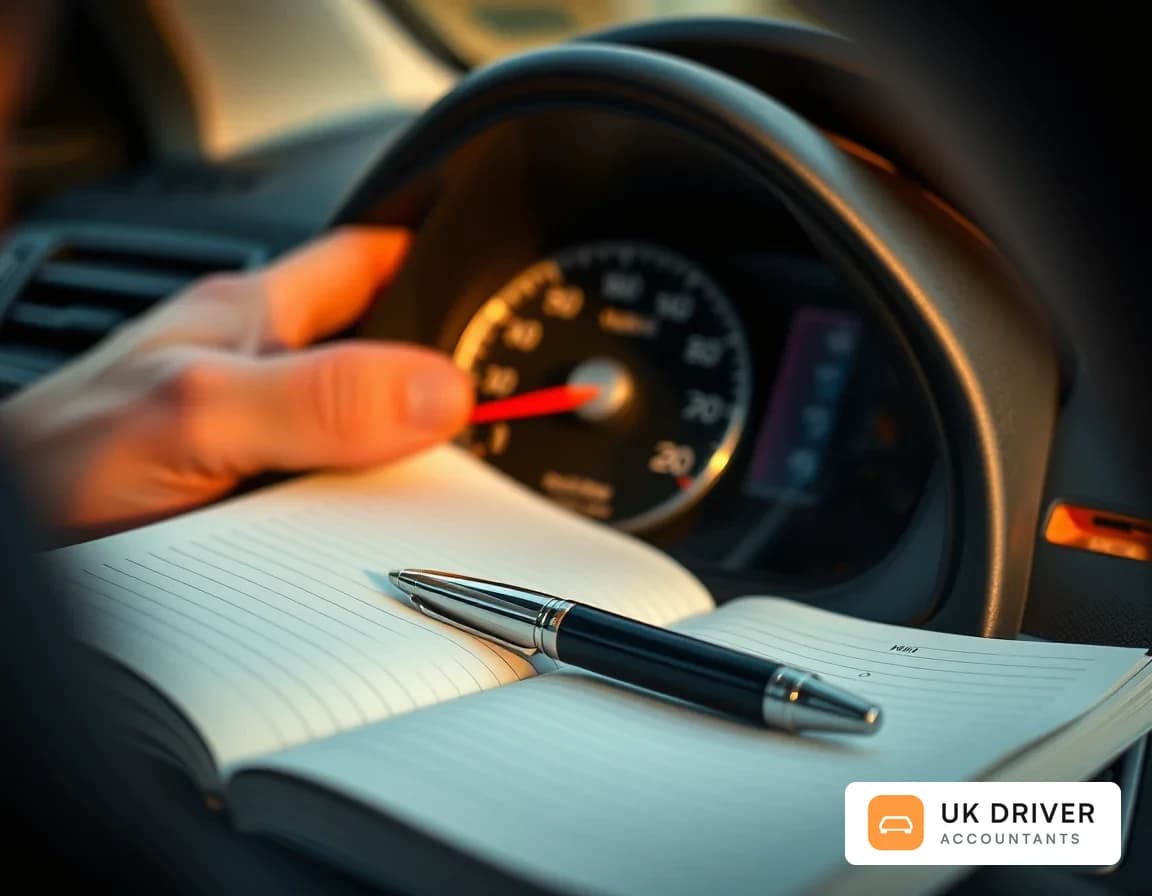
Mileage Allowance 2026: A Leeds Night Driver's Guide to 55p vs Actual Costs
The mileage allowance 2026/27 for self-employed drivers is 55p a mile for the first 10,000 business miles and 25p a mile after that. Night drivers in Leeds often clock up enough miles for the flat rate to win, but a newer car can tip the sum the other way.
Read more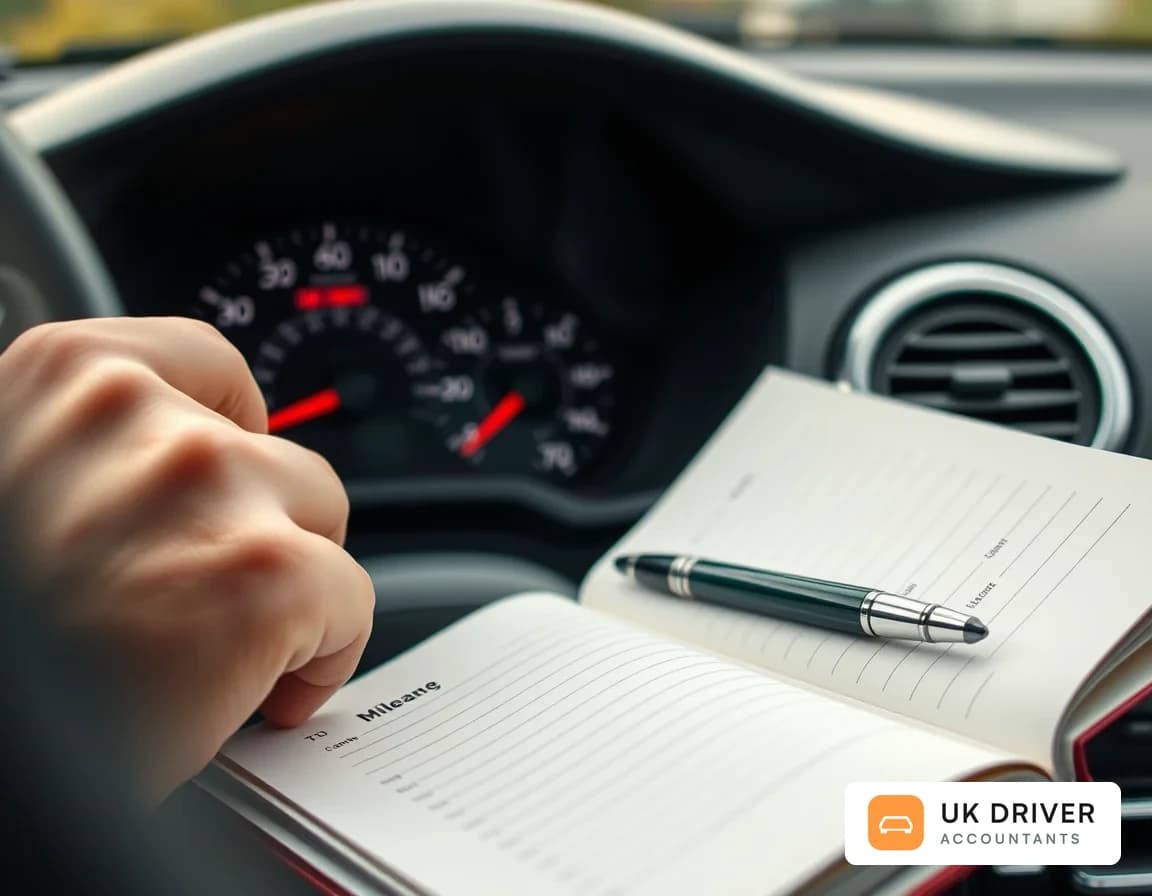
HMRC Mileage Log: What to Record and How Long to Keep It
An HMRC mileage log should show the date, the start and end of each journey (or odometer readings), the miles and the business reason, and you must keep it for at least five years after the 31 January filing deadline. HMRC does not set a format, so an app, spreadsheet or notebook all work if the record is accurate and made at the time.
Read more
Mileage Allowance Scotland: Glasgow Ride-Hailing Driver Tax Guide 2026/27
The mileage allowance in Scotland is the same as everywhere in the UK: 55p a mile for the first 10,000 business miles in 2026/27, then 25p. Glasgow ride-hailing driver tax differs only in Income Tax, which uses Scottish bands, so this guide shows both halves of the calculation with worked numbers.
Read more
Key Tax Dates for Ride-Hailing Drivers (2026/27)
One page with every date that matters, plus the two that catch drivers out most: the 31 July payment on account and the 5 October registration deadline.
Read more
Making Tax Digital for Ride-Hailing Drivers: What Changed in April 2026
The threshold is measured on your gross fares, not your profit. That one detail drags thousands of ride-hailing drivers into MTD who assumed it did not apply to them.
Read more
Sole Trader or Limited Company? An Honest Answer for Ride-Hailing Drivers
Below a certain profit, a limited company costs you more than it saves. Above it, staying a sole trader is expensive. Here is where the line sits and what actually changes.
Read more
Ride-Hailing Driver Allowable Expenses: The Complete UK Checklist
Most drivers we take on have been under-claiming for years. Here is the full list of what you can put against your income — and the handful of things HMRC will push back on.
Read more
VAT for Ride-Hailing Drivers: When You Must Register and Which Scheme to Use
Register late and HMRC bills you for VAT you never charged. Register on the wrong scheme and you hand over more than you need to. Both mistakes are avoidable.
Read more
Your First Tax Return as a Ride-Hailing Driver: A Step-by-Step Guide
Nobody tells you any of this when you pass your PHV assessment. Here is the whole process from registering with HMRC to paying your first bill.
Read moreStart Here
New to all of this?
If you have just started driving, read these three in order and you will know more than most drivers who have been at it for years.
Get an accountant who actually understands driving for a living.
A free 20-minute call. No jargon, no obligation, and a straight answer on what you should be doing next.