Mileage Rate 2026 in Sheffield: 2026 Update for Electric and Hybrid Private Hire Drivers
The mileage rate 2026 for a self-employed driver is 55p a mile for the first 10,000 business miles and 25p after that, and it is the same for electric, hybrid, petrol and diesel cars. The real decision for an electric or hybrid driver is whether that flat rate beats actual costs plus capital allowances, because the choice stays with the car.
Published 9 November 2026 · Updated 9 November 2026
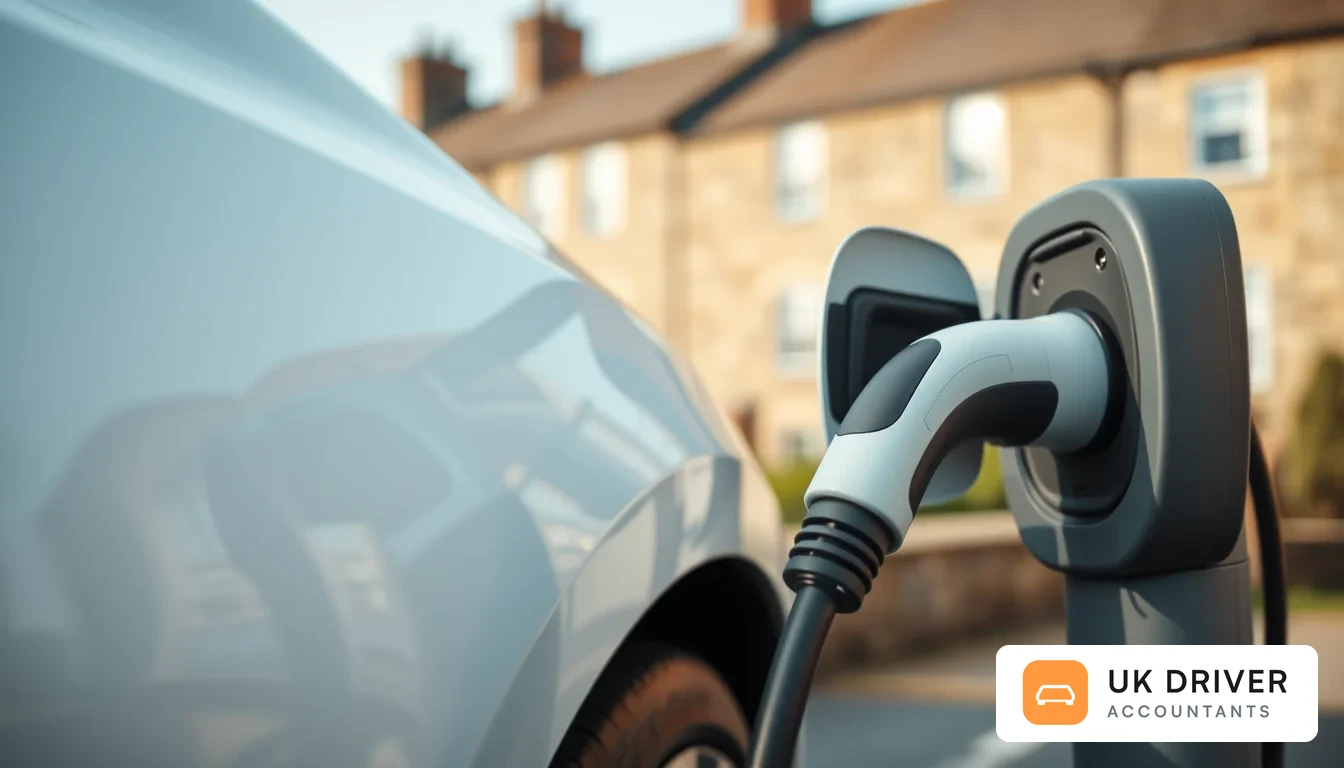
The mileage rate 2026 for self-employed drivers is 55p a mile for the first 10,000 business miles and 25p a mile after that, and it does not change with fuel type. An electric or hybrid private hire car in Sheffield gets exactly the same flat rate as a petrol or diesel one.
What does change is the comparison behind the choice of the mileage rate 2026 or actual costs. Electric cars run on cheaper energy, can qualify for a 100% first-year allowance when bought new, and have paid vehicle tax since April 2025. This update covers those electric and hybrid points only. For the general Sheffield picture, read our complete guide to the mileage rate 2026 in Sheffield and the Sheffield car mileage allowance FAQ.
Key takeaways
- The 2026/27 flat rate is 55p for the first 10,000 business miles and 25p after that, for electric, hybrid, petrol and diesel cars alike.
- On the flat rate you cannot add charging costs, vehicle tax, insurance or servicing, because the rate replaces them. Parking can still go on top.
- A new, unused zero-emission car can get a 100% first-year allowance if you use actual costs, but private use reduces the claim and a later sale can claw it back.
- Your choice sticks to the vehicle. Claim capital allowances once and that car can never move to the flat rate.
- Hybrids rarely get the 100% allowance, so for most hybrid drivers the mileage rate 2026 is the simpler and often stronger option.
What is the mileage rate 2026 for electric and hybrid cars?
The mileage rate 2026 is HMRC's flat rate for self-employed vehicle costs in the 2026/27 tax year: 55p per business mile for the first 10,000 miles, then 25p per mile. It covers buying and running the car, whatever powers it, and you claim it instead of actual costs.
According to HMRC's simplified expenses guidance for vehicles, the rate for cars and goods vehicles was 45p before 6 April 2026. The policy paper on increasing mileage rates confirms the rise to 55p took effect from 6 April 2026 for the 2026/27 tax year, and that it applies to businesses using simplified mileage rates.
Is the 55p rate really the same for electric, hybrid and petrol cars?
Yes. GOV.UK sets one flat rate for cars and goods vehicles, with no separate figure for electric or hybrid models. A fully electric car, a plug-in hybrid and a self-charging hybrid all claim 55p for the first 10,000 business miles in 2026/27 and 25p for every business mile after that.
Neither the simplified expenses page nor the policy paper links the mileage rate 2026 to fuel type at all. That matters for electric drivers, because the cost of electricity per mile is often lower than petrol or diesel. The mileage rate 2026 does not shrink to reflect that, so a driver who charges cheaply keeps the full 55p deduction.
You may have seen lower per-mile figures for electric cars, such as an advisory electricity rate. Those figures are for employers repaying staff who drive company cars. They do not apply to a sole trader claiming for their own private hire car, so ignore them for your Self Assessment return.
One group cannot use the mileage rate 2026 at all. GOV.UK excludes vehicles designed for commercial use, giving black cabs and hackney carriages as examples. A purpose-built electric hackney carriage therefore goes on actual costs. A standard car licensed for private hire is not excluded on that ground.
Can you claim charging costs on top of the mileage rate?
No. HMRC describes the flat rate as a replacement for the actual costs of buying and running the car, and electricity is the running cost of an electric car. Claiming 55p a mile and your charging bills would count the same cost twice. You choose one method for the car, not both.
Home charging
Most electric private hire drivers charge overnight at home, so the cost sits inside a household energy bill. On the mileage rate 2026 that cost is already covered and needs no apportioning. On actual costs you would need a reasonable way to split car charging from household use, such as a charger app that logs kilowatt hours, and then a business-use percentage on top.
Public rapid charging
Rapid charging between jobs is usually dearer per kilowatt hour than home charging, and it is easy to evidence because each session produces a receipt. Those receipts still cannot be added to a mileage rate 2026 claim. They are only deductible if the car is on actual costs, and then only the business share.
What you can still claim on top
GOV.UK says you can claim parking and other travel expenses, such as train fares, on top of the flat rate. Costs that are not about running the car, like your licence fees, phone and app commission, are separate business expenses whichever method you use. Our guide to allowable expenses for ride-hailing drivers lists them.
A home chargepoint is a harder case. It is equipment fixed to your home rather than part of the car, and it has its own capital allowance rules. GOV.UK's simplified expenses page does not say whether it can be claimed alongside the flat rate, so take advice before including one in either method.
How does the 100% first-year allowance work for a zero-emission car?
If you use actual costs, a new and unused car with zero CO2 emissions can qualify for a 100% first-year allowance. That lets you deduct the business share of the purchase price in the year you buy it. For Income Tax, GOV.UK says the allowance runs to 5 April 2027.
HMRC's guidance on capital allowances for business cars sets the rules for cars bought from April 2021. A new, unused car that is electric or has 0g/km CO2 gets 100% first-year allowances. A used electric car gets main rate allowances. Other cars at 50g/km or less get main rate allowances, and cars above 50g/km get the special rate.
The deadline was extended. According to HMRC's policy paper extending first-year allowances for zero-emission cars, published 26 November 2025, the allowance now ends on 5 April 2027 for Income Tax and 31 March 2027 for Corporation Tax. The paper estimates that 6,000 unincorporated businesses a year benefit, which includes sole traders. Check GOV.UK for any later extension before you buy.
Private use cuts the allowance
HMRC's guidance on capital allowance rates and pools says a sole trader who uses an item outside the business must put it in a separate pool. The claim is then reduced by the private-use share. A car used 80% for private hire therefore gets 80% of the allowance, not 100%.
Hybrids and the CO2 test
A hybrid has a tailpipe, so it cannot meet the zero-emission test for the 100% allowance. Its rate depends on the official CO2 figure on its registration document. At 50g/km or less it gets main rate allowances of 14% a year from 6 April 2026 for Income Tax, down from 18%. Above 50g/km it falls to the special rate of 6% a year.
Many plug-in hybrids sit near that 50g/km line, and most self-charging hybrids sit above it. Slow allowances of 6% a year make actual costs much less attractive, which is why the mileage rate 2026 usually suits hybrid drivers.
Mileage rate 2026 vs actual costs for electric and hybrid cars
The table compares the two methods on the points that change for electric and hybrid cars. Rates are for 2026/27 and come from the GOV.UK pages linked above.
| Point | Mileage rate 2026 (simplified expenses) | Actual costs plus capital allowances |
|---|---|---|
| What you claim | 55p a business mile for the first 10,000, then 25p | Business share of charging or fuel, insurance, servicing, tyres, repairs and vehicle tax, plus capital allowances |
| Charging costs | Covered by the rate, cannot be added | Business share allowable with evidence |
| New electric car purchase | No separate claim, covered by the rate | 100% first-year allowance on the business share, until 5 April 2027 for Income Tax |
| Used electric car purchase | No separate claim | Main rate allowances, 14% a year from 6 April 2026 |
| Hybrid purchase | No separate claim | 14% a year at 50g/km or less, 6% a year above 50g/km |
| Selling the car | No tax adjustment | Sale proceeds can create a balancing charge |
| Paperwork | Business mileage log | Mileage log for business share, plus every receipt and the purchase invoice |
| Can you change later? | No, while the car stays in the business | No, the car can never move to the flat rate |
Why is your first choice locked in for that car?
GOV.UK says that once you use flat rates for a vehicle, you must keep using them for as long as you use that vehicle in your business. It also says you cannot use simplified expenses for a vehicle you have already claimed capital allowances for. Either way, the first choice binds that car.
The lock applies car by car, not driver by driver. When you replace your electric car, the new one is a fresh decision. You do not have to use the same method for every vehicle, so a driver with a hybrid on the flat rate can put a new electric car on actual costs if the numbers support it.
This is why the first return after you buy a car matters so much. If you are changing cars mid-year, our Newcastle FAQ on changing or adding a car explains how the 10,000-mile band and the method choice work across two vehicles. The rules are UK-wide, so the answers apply in Sheffield too.
Vehicle tax for electric cars since April 2025
Electric cars used to be exempt from vehicle tax. GOV.UK's guidance on vehicle tax for electric and low emission vehicles says that changed on 1 April 2025. A car registered from 1 April 2025 pays £10 in its first year and then the standard rate of £200. One registered between 1 April 2017 and 31 March 2025 pays £200.
There is also an expensive car supplement for electric cars registered from 1 April 2025 with a list price above £50,000. GOV.UK says it applies for five years from the second year of tax. Private hire cars rarely reach that price, but check the list price before you buy.
For your tax return, vehicle tax is a running cost. On the mileage rate 2026 it is already inside the 55p and 25p figures. On actual costs, the business share is deductible. The April 2025 change slightly narrows the running-cost gap between electric and petrol cars, which nudges the comparison towards the flat rate.
Illustrative example: a Sheffield driver with a new electric car
This is an illustrative example with an invented driver and invented figures. Dana drives private hire full time from a home in Sheffield. In May 2026 she buys a new, unused fully electric car for £32,000. She drives 28,000 miles a year, of which 24,000 are business miles, so her business-use share is 24 ÷ 28, about 85.7%.
Her illustrative yearly running costs are £2,600 for home and public charging, £2,200 for hire and reward insurance and £900 for servicing and tyres. Vehicle tax is £10 in year one and £200 after that. She expects to sell the car after four years for £12,000. All of these are her own estimates, not market prices.
| Item (illustrative example) | Mileage rate 2026 method | Actual costs method |
|---|---|---|
| Year 1 vehicle claim | 10,000 x 55p + 14,000 x 25p = £9,000 | £27,429 allowance (£32,000 x 85.7%) + £4,894 running costs = £32,323 |
| Years 2 to 4, per year | £9,000 (if rates are unchanged) | £5,057 running costs (£5,900 x 85.7%) |
| Sale in year 4 | No adjustment | Balancing charge of about £10,286 (£12,000 x 85.7%) added to profit |
| Four-year total relief | £36,000 | £27,429 + £20,065 - £10,286 = £37,208 |
Over four years, the two methods end up only about £1,200 apart. The big difference is timing. Actual costs give Dana a large deduction in 2026/27, which can wipe out much of that year's taxable profit, and then a smaller claim each year and a tax charge when she sells.
Timing can still be valuable. Relief in a year you pay higher tax, or a year with a large profit, may be worth more than the same relief spread out. But a front-loaded claim needs every receipt, a solid charging split and a clean mileage log. If Dana prefers simple records, the mileage rate 2026 gives almost the same result over the life of the car.
Change one assumption and the answer moves. A cheaper used electric car gets only 14% a year, so actual costs lose their early lead. Higher business use, a more expensive car or a lower resale value push the result towards actual costs. Our mileage calculator works out the mileage rate 2026 side for your own miles.
How to choose a method for your electric or hybrid car
- Confirm the car's status: new or used, its purchase date and the official CO2 figure on the registration document.
- Estimate your business miles for a full year from your driver app summaries and your own log, then work out your business-use percentage.
- Work out the mileage rate 2026 claim: 55p for the first 10,000 business miles and 25p for the rest, for 2026/27.
- List realistic yearly running costs, splitting home charging from household energy, and add hire and reward insurance, servicing, tyres and vehicle tax.
- Work out the capital allowance: 100% for a new zero-emission car bought by 5 April 2027, 14% or 6% a year otherwise, all reduced for private use.
- Compare the totals over the years you expect to keep the car, including any balancing charge when you sell it.
- Record your decision and your workings with your tax records, then apply the same method for that car on every later return.
Good records support both methods. Our guide to HMRC mileage logs and bookkeeping explains what a log should show. If your qualifying income is above £50,000, Making Tax Digital for Income Tax applies from 6 April 2026, so your vehicle method feeds into quarterly updates too. Read Making Tax Digital explained for ride-hailing drivers for the thresholds of £30,000 from April 2027 and £20,000 from April 2028.
What Sheffield electric and hybrid drivers should check locally
Sheffield City Council's page on Clean Air Zone charges lists taxis and private hire vehicles among the vehicles that are charged, at £10 a day for smaller vehicles, unless they meet the government's emission limits. Lower-polluting vehicles do not pay. Use the GOV.UK vehicle checker to confirm your own car before you rely on that.
That is one practical reason many Sheffield drivers move to electric or hybrid cars, but it does not change the mileage rate. Licensing fees, vehicle tests and any zone charges are covered in the two existing Sheffield guides linked at the top. Confirm current council fees and vehicle rules directly with Sheffield City Council before buying a car for private hire work.
Common mistakes and the cost of each
- Claiming 55p a mile and charging receipts: a double claim. HMRC can disallow it, charge the extra tax with interest and may add a penalty if it finds the error careless.
- Claiming the 100% allowance on a used electric car: the claim is wrong because only new and unused cars qualify, and the excess is clawed back with interest.
- Claiming the full allowance on a car you also drive privately: the allowance must be cut by private use, so an unadjusted claim overstates expenses.
- Switching a car from capital allowances to the flat rate: GOV.UK does not allow it, so the flat-rate claim would be refused for that car.
- Forgetting the balancing charge on sale: profit is understated in the year you sell, which can lead to a larger bill and interest later.
- Using an employer's electricity rate per mile for a self-employed claim: that rate is for company cars, not your own Self Assessment.
Key terms
- Simplified expenses: HMRC's flat-rate method, here 55p then 25p a business mile, used instead of actual vehicle costs.
- Capital allowances: tax relief on the cost of business equipment, including cars, claimed instead of depreciation.
- First-year allowance (FYA): an allowance that gives relief on a set share of the cost in the year of purchase, 100% for qualifying zero-emission cars.
- Main rate and special rate: yearly writing down allowances of 14% and 6% for Income Tax from 6 April 2026.
- Balancing charge: an amount added back to profits when you sell an asset for more than its remaining tax value.
- Making Tax Digital (MTD): HMRC's system of digital records and quarterly updates for qualifying income above set thresholds.
How UK Driver Accountants helps
We work only with drivers, on fixed fees from £20 a month, and we are independent of any ride-hailing app. For electric and hybrid drivers we run the mileage rate 2026 and actual-cost comparison, apply the private-use restriction correctly and file your return through our personal tax service. Sheffield drivers can find local details on our Sheffield accountants page, and our pricing page sets out every fee.
If you are buying a new electric car before 5 April 2027, or you are not sure which method your current car is locked into, contact our team and we will check your figures before you file.
Last reviewed 9 November 2026 by the UK Driver Accountants tax team
This article is general information about UK tax for the 2026/27 tax year and is not personal tax advice. Rules and rates can change, so check GOV.UK and speak to a qualified accountant about your own circumstances. If HMRC opens an enquiry or proposes a penalty, professional representation is recommended.
Questions drivers ask about this
Would you rather not think about any of this?
That is exactly what we are for. Send us your driver app statements and we will handle the return, the quarterly updates and the deadlines — and tell you honestly if there is a better way for you to be set up.


